Guide · The profession
Security guard, vigile, SSIAP, dog handler, team leader: what are the differences?
A security quote that simply lists “4 guards” without saying which ones tells you nothing. Here are the profiles that actually exist, what they’re trained to do, and what sets them apart on an invoice.
Key points
“Vigile” isn’t a job title: it’s the everyday French word for the agent de prévention et de sécurité — the licensed security guard, also called APS or ADS — trained over around 175 hours and holding a five-year professional licence from CNAPS, France’s private-security regulator. The SSIAP fire safety officer is a fire-safety specialist, with three levels, compulsory in certain public-access buildings (ERP); the security dog handler works with a dog they handle, on large sites; the team leader runs a team and keeps the incident log. Each profile has its own training, its own endorsement on the professional licence, and its own cost. A proper quote states which profile holds which post.
Contents8 sections
- The profiles at a glance
- The agent de prévention et de sécurité: the baseline role
- The SSIAP officer: fire safety
- The dog handler: a team of two, not just a dog
- The team leader: the one who decides on the ground
- The front-desk security officer and the patrol officer
- And the company itself
- What this changes on a quote
- Frequently asked questions
The profiles at a glance
| Profile | Initial training | Qualification required | Typical duties | Relative cost |
|---|---|---|---|---|
| Agent de prévention et de sécurité (APS / ADS) | Vocational qualification of around 175 hours, then refresher training every five years | CNAPS professional licence, “human surveillance” category | Surveillance, access control, patrols, prevention, conflict management, first aid | 100 |
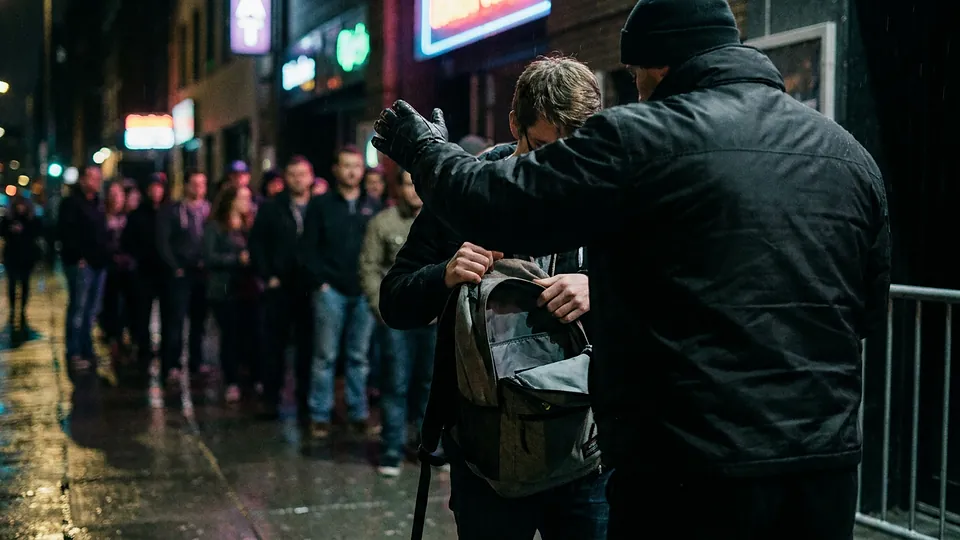
| Event security guard | APS, often supplemented by training in large-gathering events and pat-down accreditation | Professional licence, pat-down accreditation where applicable | Screening, headcounts, crowd flow, backstage, pat-downs if accredited | 100 to 130 |
| SSIAP 1 fire safety officer | SSIAP 1 training (around 70 h) and refreshers | SSIAP qualification; CNAPS licence only if also on surveillance duty | Fire safety in public-access buildings (ERP) and high-rise buildings (IGH), technical patrols, alarm verification, evacuation | 95 to 115 |
| SSIAP 2 / SSIAP 3 | Supervisor level (SSIAP 2) and manager level (SSIAP 3), gained through experience | SSIAP qualification for the level | Running the fire safety team, security control room, liaison with the local fire safety committee | 115 to 150 |
| Security dog handler | APS, then specific handler training; dog microchipped and assessed | Professional licence with the “dog handler” endorsement | Surveillance of large sites, construction sites, warehouses, deterrence, presence detection | 120 to 150 |
| Team leader | Experienced guard, often trained in team management or SSIAP 2 | Professional licence | Coordinating the team, incident log, point of contact for the client and the emergency services | 120 to 150 |
| Front-desk security officer | APS, selected on presentation and spoken manner | Professional licence as soon as there is a screening duty | Meeting visitors in person and by phone, badges, the visitor log, vigilance in a company lobby | 100 to 115 |
| Patrol officer / alarm responder | APS, driving licence, training in alarm systems | Professional licence | Night patrols, opening and closing up, verification when an alarm triggers | Billed per shift or per call-out |
The agent de prévention et de sécurité: the baseline role
The official term is agent de prévention et de sécurité; “security guard”, “ADS” and “vigile” all refer to the same person. To practise, they must hold a professional licence issued by CNAPS after certified training of around 175 hours — legal framework, conflict management, first aid, fire safety, patrols, access control — and a background check. The licence is valid for five years; renewing it means attending a refresher and skills-update course.
Their duties: watching, preventing, deterring, screening access, defusing conflict verbally, alerting and guiding the emergency services, and reporting in writing. They have no police powers: what they can and can’t do is set out in detail in our guide to a security guard’s rights.
The SSIAP officer: fire safety
SSIAP stands for service de sécurité incendie et d’assistance à personnes (fire safety and assistance-to-persons service). The three levels — SSIAP 1 (officer), SSIAP 2 (supervisor), SSIAP 3 (manager) — are defined by the order of 2 May 2005 and correspond to separate qualifications, with three-yearly refresher training. Their presence is compulsory in certain public-access buildings and high-rise buildings, depending on the type and category of the building as set by the fire safety regulations.
An important point: fire safety is not, in itself, a private security activity within the meaning of the French Internal Security Code (Code de la sécurité intérieure). An SSIAP officer assigned exclusively to fire safety doesn’t need a CNAPS licence; as soon as they also carry out a surveillance or screening duty, they need one. In practice, many ERP-based officers hold both qualifications, which lets them cover a multi-purpose post. See our guide on when an SSIAP officer is compulsory.
The dog handler: a team of two, not just a dog
The dog handler holds a professional licence bearing the corresponding endorsement, obtained after specific training. The dog is microchipped, vaccinated, assessed, and stays under the permanent control of its handler, kept on a lead; it is a means of deterrence and detection, never a means of restraint. The pair is particularly effective on large sites that are poorly lit or hard to access: construction sites, warehouses, vacant sites, a festival’s camping field. Its higher cost reflects the dual skill set and the animal’s upkeep; it often makes a better substitute than a second guard over a large perimeter.
The team leader: the one who decides on the ground
Team leader isn’t a legal status but a function: they run the team, organise shift changes, keep the incident log, make the call when something happens, and remain the sole point of contact for the client, the emergency services and the police. Any arrangement of four to five guards or more, or one covering several posts, needs one. In large ERPs, the team leader is often an SSIAP 2; on an event, an experienced guard trained in coordination.
The front-desk security officer and the patrol officer
In an office environment, the front-desk security officer represents the company’s image as much as they screen its access points: presentation, spoken manner and discretion matter as much as vigilance. Pure reception work isn’t a regulated profession; as soon as there’s screening or surveillance involved, the professional licence is required. The patrol officer, or alarm responder, works on the move: time-stamped visits across several sites, opening and closing up, verification when an alarm triggers. They’re billed per shift or per call-out rather than by the hour.
And the company itself
Above the guards, the company itself must hold an operating authorisation, and its managing director an accreditation, both issued by CNAPS. This is what distinguishes a private security company from a mere temping agency or a collective of freelancers. Our guide how to check that a security company is properly licensed details the checks to make.
What this changes on a quote
A quote that specifies “2 APS, 1 SSIAP 1, 1 team leader, 7 pm to 3 am” lets you understand what you’re paying for and compare offers. A quote that just says “4 guards” with no qualification given may be hiding posts held by the wrong profile — or by unlicensed staff. Insist on a breakdown by profile; it’s also what lets you check that the arrangement meets your obligations, particularly in an ERP.
Sources and reference texts
- French Internal Security Code (Code de la sécurité intérieure), Book VI: professional licence (L.612-20), operating authorisation and accreditation
- CNAPS — France’s private-security regulator
- National collective agreement for prevention and security companies (IDCC 1351): job classifications and pay grades
Private security company in Chalon-sur-Saône, published under the responsibility of Richard Le Goff, president. This guide is for information only and does not replace an assessment of your situation: tell us what you need and we'll reply within 24 working hours.
Who we are