Guide · Public buildings & local authorities
ERP: when is an SSIAP officer mandatory?
Gym, village hall, pool, shop, theatre: the requirement for a fire safety service does not depend on how big a place feels, but on a precise classification. Here is how to read it.
Key points
The requirement depends on the type of your public-access building (L for performance and meeting halls, M for shops, X for covered sports facilities, and so on) and its category (1st to 5th, based on the number of people permitted), both set by the fire safety regulations (order of 25 June 1980, articles MS 46 et seq.). The largest establishments must have, whenever the public is present, a fire safety service made up of SSIAP fire safety officers (French fire-safety certification), overseen where relevant by an SSIAP 2 team leader and an SSIAP 3 service manager; the smallest only need designated, trained staff. Your fire safety register and the latest opinion from the safety commission give the exact answer for your building, and extra staffing can be required for a one-off event.
Contents7 sections
Type and category: the key to everything
Every public-access building is classified according to its activity (the type, shown as a letter) and the number of people it can hold (the category). This classification appears in the fire safety register and in the safety commission's reports.
| Type | Activity | Examples |
|---|---|---|
| L | Auditoriums, conference, meeting, performance and multipurpose halls | Village hall, theatre, concert hall, multipurpose hall |
| M | Shops, shopping centres | Supermarket, shopping mall, boutique |
| N | Restaurants and drinking establishments | Restaurant, bar, reception hall with catering |
| P | Dance halls and games halls | Nightclub, dance hall |
| S | Libraries, resource centres | Media library |
| T | Exhibition halls | Exhibition centre, trade show hall |
| X | Covered sports facilities | Gym, indoor pool, ice rink |
| PA | Open-air facilities | Stadium, outdoor pool, racecourse |
| CTS | Marquees, tents and structures | Festival marquee, festival structure |
| Category | Permitted number of people |
|---|---|
| 1st | More than 1,500 people |
| 2nd | 701 to 1,500 people |
| 3rd | 301 to 700 people |
| 4th | 300 people or fewer, excluding the 5th category |
| 5th | Small establishments, below the thresholds set for each type |
What article MS 46 says
The fire safety regulations set out, in articles MS 45 et seq., how the fire safety service must be organised. Depending on the type and category, it can be provided by:
- designated staff appointed by the building's operator and trained in using firefighting equipment and evacuation procedures — the general case for small establishments;
- qualified fire safety officers (SSIAP 1), in numbers set by the special provisions for each type;
- a full fire safety service, with a team leader (SSIAP 2) and, in the largest establishments, a service manager (SSIAP 3), present throughout the time the public is on site and sometimes round the clock.
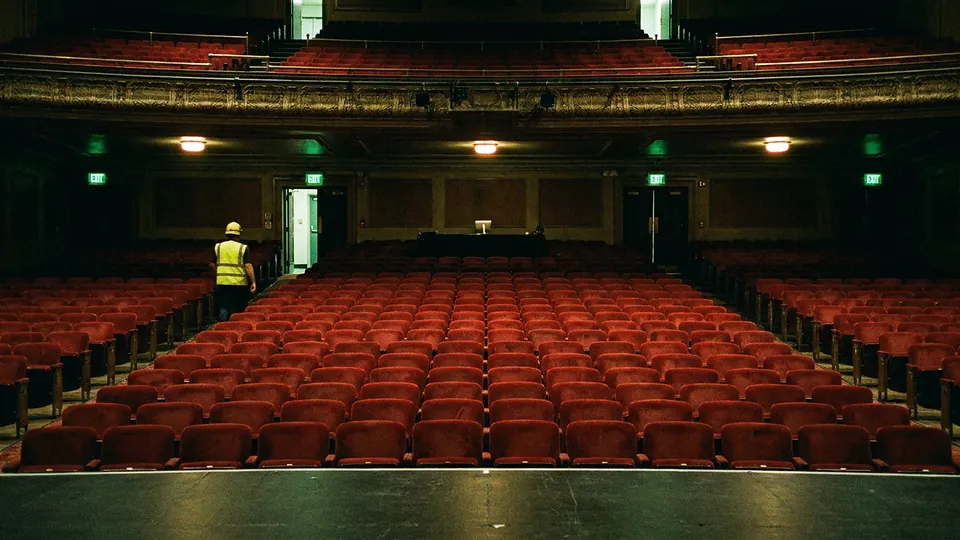
The special provisions for each type set out the staffing: for instance, a large 1st-category theatre must have a service made up of supervised SSIAP officers, with a service manager above a certain headcount; a large 1st-category shop or shopping centre must also have SSIAP officers on duty while open; a 4th- or 5th-category gym or village hall most often only needs designated staff. Your fire safety register and the commission's opinion settle the question for your building, and the commission can adjust the staffing to fit the layout of the premises.
Reading your fire safety register
The fire safety register is the reference document: the building's classification, permitted numbers, the required make-up of the fire safety service, periodic checks, evacuation drills, and the reports of the safety commission's visits, with their requirements. If the fire safety service is described there — number of officers, qualifications, presence while open or round the clock — that is the staffing level that applies. If in doubt, the safety commission for the town or district will advise, and the departmental fire and rescue service (SDIS) reviews the files.
What an SSIAP officer actually does
- fire safety patrols: checking exits are clear, fire doors, firefighting equipment, at-risk rooms;
- operating the fire safety system at the security post: verifying alarms, resetting the system, following instructions;
- issuing and tracking hot work permits for work involving naked flames or sparks;
- raising the alarm, and guiding and welcoming the fire brigade;
- directing evacuations and drills;
- helping people: first aid, medical emergencies, someone stuck in a lift;
- keeping the incident log and the register.
For the difference between SSIAP and a security guard, see security guard, vigile, SSIAP, K9 handler: what is the difference.
One-off events: extra staffing
A concert in a gym, a trade show in a multipurpose hall, a gala dinner in an exhibition hall: using an ERP outside its normal purpose falls under article GN 6 of the regulations. The operator applies to the mayor for authorisation a month beforehand; the safety commission issues an opinion and frequently requires a reinforced fire safety service for the length of the event — one or more SSIAP officers, sometimes a team leader — on top of the stewarding. This is the most common situation in which a local authority brings in SSIAP officers as one-off reinforcement.
Combining fire safety and security
An SSIAP officer assigned solely to fire safety does not need a CNAPS professional licence; as soon as they also carry out surveillance or screening duties, the licence becomes mandatory. Many officers hold both qualifications, which allows for a dual-purpose post — provided the staffing required by the regulations is still met: an SSIAP officer whose presence at the security post is mandatory cannot leave that post to cover an entrance. On a full deployment, SSIAP posts and security posts are therefore kept separate, even where staff are dual-qualified.
The position for local authorities
Swimming pools, gyms, village halls, media libraries, theatres: municipal facilities are ERPs, and the local authority is the operator. The recurring points to watch: an outdated classification that no longer matches actual use, one-off events organised without a GN 6 request, and confusion between a lifeguard — who is not a fire safety officer — and the fire safety service. We respond to local authority tenders and supply the documents required: the operating authorisation, the SSIAP qualifications of the officers assigned, insurance and vigilance certificates, and a technical statement.
Sources and reference texts
- French Building and Housing Code (Code de la construction et de l'habitation) — public-access buildings (classification, safety commissions)
- French Internal Security Code (Code de la sécurité intérieure), book VI — professional licence and private security activities
- CNAPS — France's private-security regulator
Private security company in Chalon-sur-Saône, published under the responsibility of Richard Le Goff, president. This guide is for information only and does not replace an assessment of your situation: tell us what you need and we'll reply within 24 working hours.
Who we are