Screening at the turnstiles
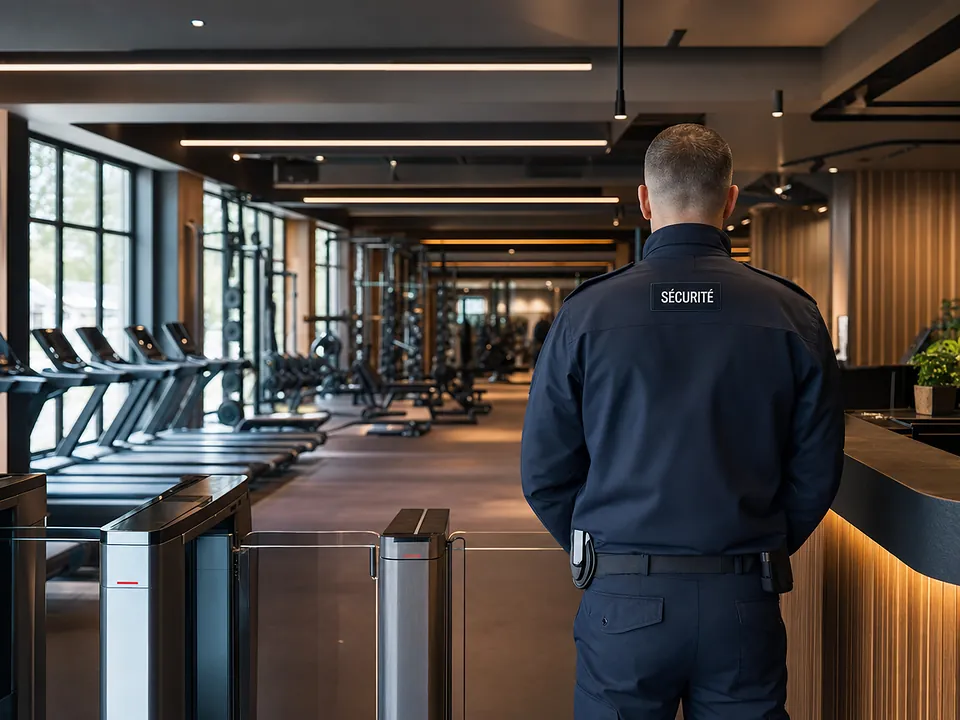
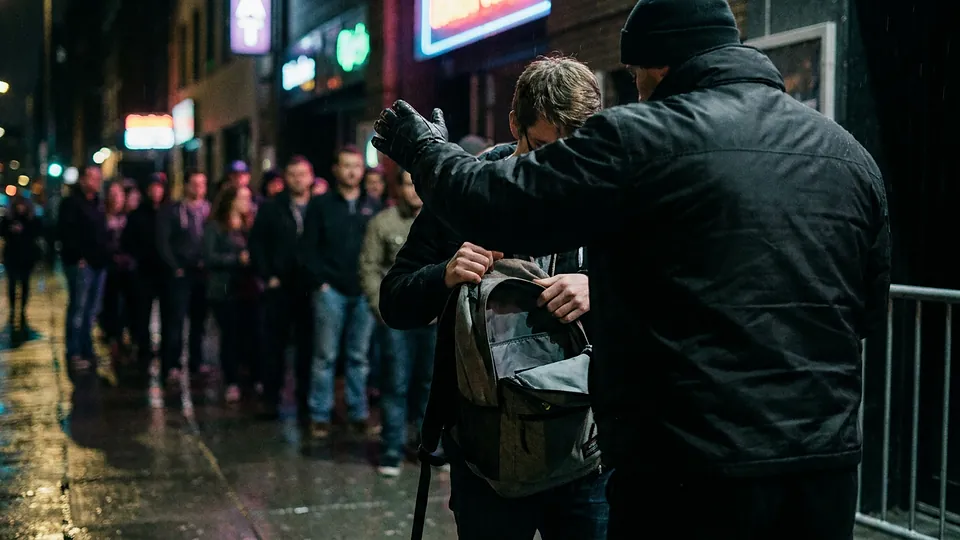
Checking that everyone who passes through the turnstile is a genuine member, managing guests and trial sessions, refusing entry to excluded or unauthorised people.
Service
A gym brings together everything that makes security complicated: turnstiles that count badges but not people, changing rooms where thefts multiply, late slots when a single member of staff is holding the desk — or none at all, with 24/7 access. We place officers holding the CNAPS professional licence at the times your club is genuinely exposed, not all day on principle.
01 · Duties
The post is defined with you before the first shift begins: screening, presence on the gym floor, changing rooms, closing. Nothing is improvised on the day.
Checking that everyone who passes through the turnstile is a genuine member, managing guests and trial sessions, refusing entry to excluded or unauthorised people.
Regular patrols across the cardio area, weights room and group classes: preventing tension over equipment, inappropriate behaviour, and breaches of house rules.
Frequent passes through the changing areas, monitoring access to them, handling reported thefts and lost property, a written report for your insurer and for the member's complaint.
A fight between members, someone feeling unwell on a machine, an intoxicated person late at night: the officer steps in, secures the situation, calls the emergency services if needed, and reports back.
Checking the club is empty — gym floor, changing rooms, toilets, class studios — switching off lights, locking up and setting the alarm, especially where the last member of staff used to leave alone.
Opening a new club, an open day, a competition or event on your premises, the January rush: a plan sized to the event, with no annual commitment.
02 · Sizing
A 2,000 m² club open 24/7 and a local gym that closes at 9 pm don't have the same needs. We start from how you actually operate, not a flat package.
What hours are you open, and how many staff are on duty during each slot? The periods when a single person is holding the desk — or nobody at all, with self-service access — are our starting point.
Thefts in the changing rooms, people getting in without paying, fights, damage, complaints from members: even informal records tell us where and when to post an officer. We don't guess.
Number of entrances, fire exits, visibility from the desk to the turnstiles, blind spots (changing rooms, corridors, car park). This is what fixes the officer's post and patrol route.
A fixed post for night shifts, reinforcement on Saturdays, a few weeks of cover to defuse a tense situation: the contract follows your activity, not the other way round.
03 · Real-world examples
An officer on post from 9 pm to 1 am, or time-stamped patrols through the night: the club stays accessible to members without being left to fend for itself, and night-time incidents stop.
A discreet presence during identified time slots, access control at the changing rooms, a report for every incident reported. The problem generally stops within the first few weeks, after which the arrangement is scaled back.
Screening at the entrance, managing queues and trial sessions, protecting new equipment during the opening event, then handing over to a regular post if the need is confirmed.
04 · Frequently asked questions
The questions that come up most before booking this service. If yours isn't here, ask us: reply within 24 working hours.
No, no regulation requires it as such. A gym is a public-access building (ERP) — most often type X, covered sports facilities — whose obligations relate primarily to fire safety and evacuation. Having an officer on site is a management choice: protecting your members and staff, stopping theft and people getting in without paying, and securing night shifts.
We tell you honestly whether an officer would be useful, and for which time slots, rather than selling you a full-day post.
Yes, this is in fact the most common setup: incidents are concentrated in the night shifts, late evenings and Saturdays. A post of a few hours during these slots costs far less than a permanent presence and resolves most of the problem.
They never open a locker themselves. For bags, they may offer a visual inspection with the person's agreement; a security pat-down is only possible in specific circumstances, with the explicit consent of the person concerned and specific authorisation. If a theft is confirmed, they call the police and preserve any useful evidence. See our guide on what a security guard is allowed to do.
They can refuse entry or ask a person to leave the premises on the basis of your house rules and the instructions you give us. They have no power to use force: if the person refuses or there is clear disorder, they call the police and write a detailed report, which you can use for cancelling the membership.
The service is billed by the hour and per officer, with night, Sunday and bank-holiday premiums clearly identified on the quote. A four-hour night post, five evenings a week, remains a controlled budget when set against the thefts, damage and cancelled memberships it prevents. See our price guide.
Yes, in franchises as well as company-owned branches. We follow the chain's procedures where they exist and provide the documents expected by procurement departments: operating authorisation, insurance and URSSAF compliance certificates, and the professional licences of the officers assigned.
05 · Where we operate
We cover Burgundy-Franche-Comté and the Rhône, with guards based across these areas. Check your area's page for the full list of towns covered.
 Regulations
Pat-down, search, visual inspection: what a security guard is allowed to do
A private security guard can visually inspect a bag — you open it, they look without touching — and, with your agreement, search it. A security pat-do…
Regulations
Pat-down, search, visual inspection: what a security guard is allowed to do
A private security guard can visually inspect a bag — you open it, they look without touching — and, with your agreement, search it. A security pat-do…
 Public buildings & local authorities
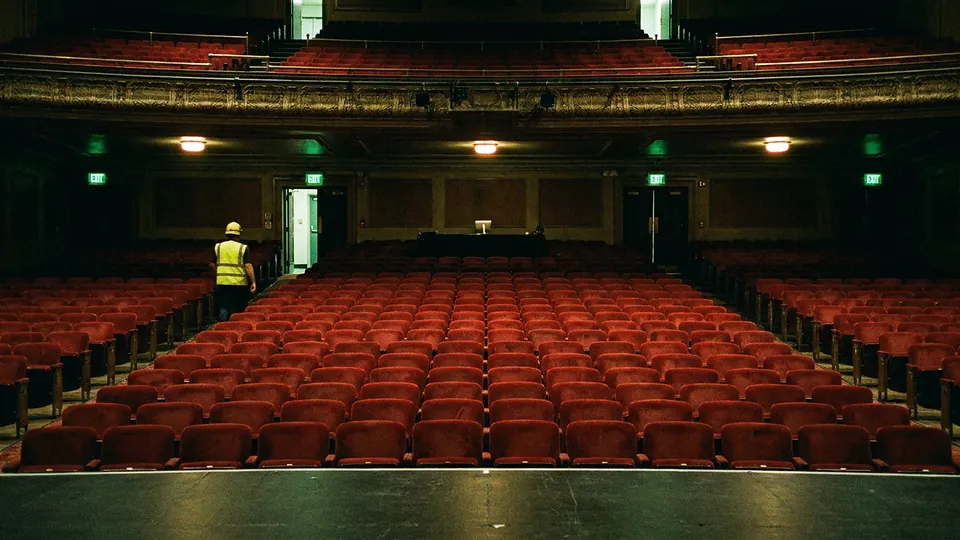
ERP: when is an SSIAP officer mandatory?
The requirement depends on the type of your public-access building (L for performance and meeting halls, M for shops, X for covered sports facilities,…
Public buildings & local authorities
ERP: when is an SSIAP officer mandatory?
The requirement depends on the type of your public-access building (L for performance and meeting halls, M for shops, X for covered sports facilities,…
 Regulations
How to check that a private security company is properly licensed: CNAPS, URSSAF, insurance
Five checks are enough: (1) the company holds an operating authorisation issued by CNAPS, whose number appears on its quotes and invoices; (2) each gu…
Regulations
How to check that a private security company is properly licensed: CNAPS, URSSAF, insurance
Five checks are enough: (1) the company holds an operating authorisation issued by CNAPS, whose number appears on its quotes and invoices; (2) each gu…
06 · Free quote
Describe the situation to us in a few lines. We come back to you within 24 working hours with a detailed quote, free and with no obligation.
Reply within 24 working hoursEven faster for requests flagged as urgent.
Detailed quoteNumber of guards, hours of cover, qualifications, premiums: it's all written down.
Supporting documents suppliedOperating authorisation, professional liability insurance, URSSAF compliance certificate.
Three questions, a detailed quote within 24 working hours. You then speak to the managing director, not a platform.