Guide · Events
Village fête, dance, fireworks: the organiser's security obligations
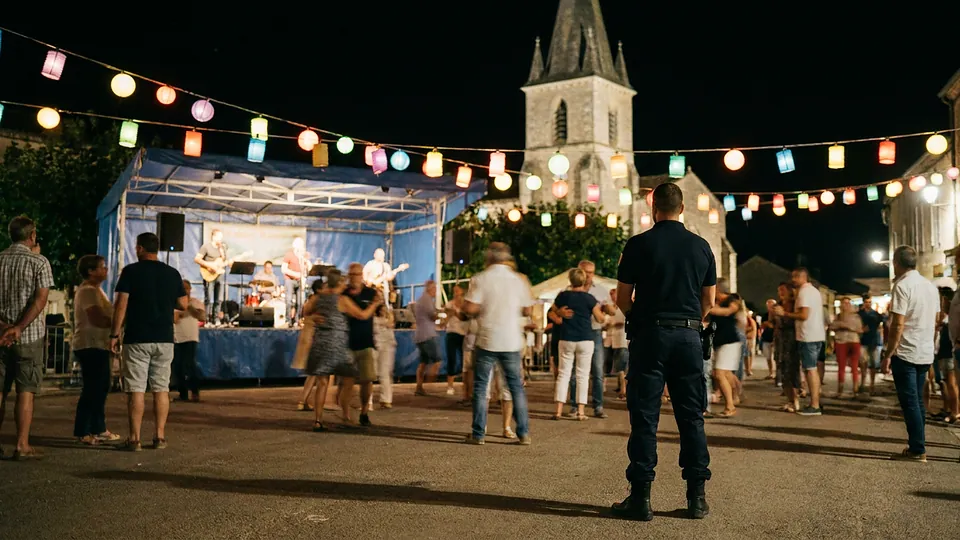
A village dance or fête calls on a handful of volunteers for an entire night. Here, in order, are the steps and the arrangements that protect the organiser — and the public.
Key points
For a village fête or dance, the organiser must obtain the mayor's authorisation (use of public land, plus an order setting the hours and requirements), declare the event to the town hall at least one month beforehand if it may draw more than 1,500 people, apply for a temporary licence to sell alcohol for the bar, arrange a first-aid post sized according to the national reference framework and, as soon as alcohol, a crowd and night-time all come together, a security team made up of licensed guards, whose numbers are agreed with the town hall. Fireworks add a qualified pyrotechnician, a safety exclusion zone and, depending on the fireworks used, a declaration to the town hall and the prefecture.
Contents7 sections
Who is responsible for what
The organiser — town council, fête committee, association — is responsible for the safety of the public it welcomes: it chooses the site, sizes the arrangements, takes out organiser's public liability insurance and follows the requirements it is given. The mayor, under their policing powers, authorises the use of public land, sets the hours, can impose measures and, as a last resort, ban the event. The gendarmerie or police keep public order on public roads, but they do not run your event: they are not its stewarding team.
In practice, the fête's safety rests on three distinct arrangements that are often confused: the security team (private guards), the first-aid post (first responders) and, for larger events, the public order arrangements coordinated with the police.
The timeline of formalities
| Formality | Who to contact | When | What to know |
|---|---|---|---|
| Authorisation to use public land, order setting hours and traffic arrangements | Town hall | 2 months ahead | The mayor can require a set number of security guards, a bar closing time, a time for the music to end |
| Declaration for an event of more than 1,500 people (public and staff) | Town hall (Paris police prefecture in Paris) | 1 month minimum, 1 year maximum ahead | Articles R.211-22 et seq. of the French Internal Security Code (Code de la sécurité intérieure); the file describes the stewarding team |
| Temporary alcohol licence (bar) | Town hall | At least 15 days ahead | Only drinks in the authorised licence categories; associations are limited to five licences a year |
| First-aid post (advance medical cover plan) | Accredited civil-protection association | 1 to 2 months ahead | Sized using the risk-assessment grid in the national framework |
| Private security team | Company authorised by CNAPS (France's private-security regulator) | 3 to 4 weeks ahead | Numbers agreed with the town hall; guards holding the CNAPS professional licence |
| Fireworks | Town hall and prefecture | 1 month ahead | Declaration required depending on the category and quantity of fireworks; pyrotechnician holding a qualification certificate |
| Music licensing declaration | Copyright collection body | Before the event | Fee based on capacity and budget |
When do you need security guards?
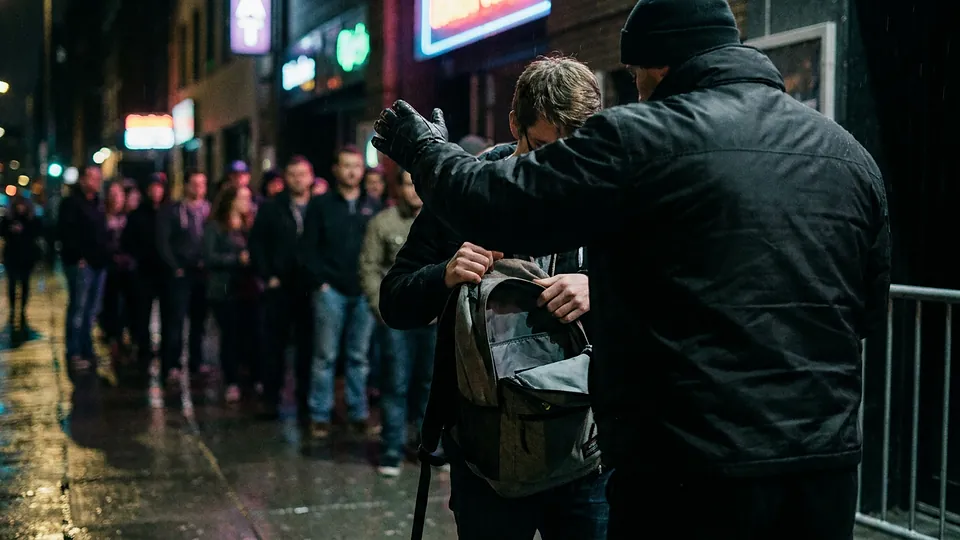
No legal threshold triggers the requirement, but three ingredients together — alcohol, a crowd, night-time — make it unavoidable in practice, and mayors increasingly require it in their order. Volunteers can welcome guests and run the bar and ticket office; surveillance and access screening are a regulated activity reserved for licensed guards.
| Format | Expected numbers | Typical headcount |
|---|---|---|
| Village meal, daytime entertainment | up to 300 | 0 to 1 guard, depending on the bar and hours |
| Evening dance or concert, open site | 300 to 800 | 2 to 5 guards |
| Fête with dance, bar and fireworks | 800 to 1,500 | 4 to 8 guards and a team leader |
| Declared event of more than 1,500 people | 1,500 and above | Arrangements set out in the declaration, often 8 guards or more |
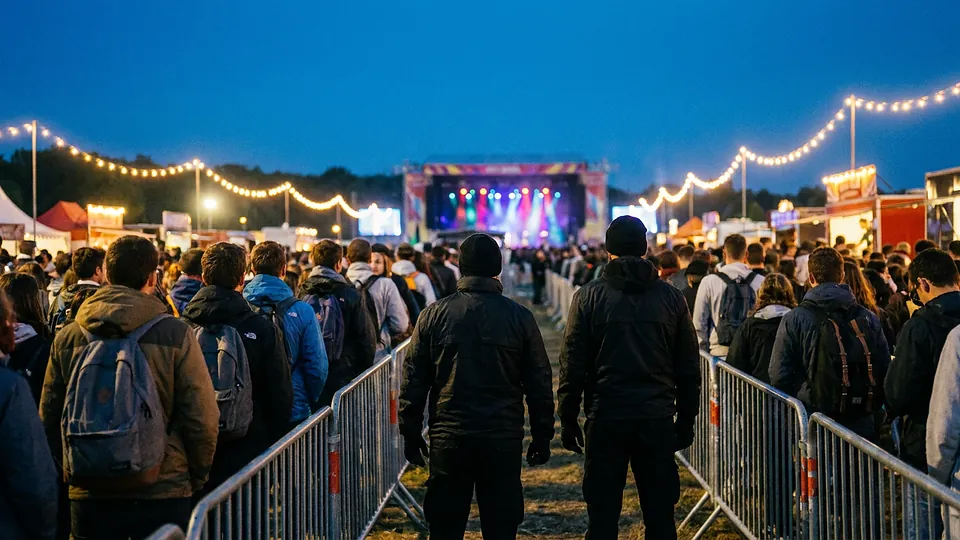
Private guards secure the site and its access points. On public roads themselves, they may only act in exceptional circumstances, with the prefect's authorisation, under the framework set out in Article L.613-1 of the Code: traffic and public order remain the responsibility of the mayor and the police. A well-designed layout therefore clearly marks out the fête's footprint, with barriers or walkways, so guards have a defined perimeter to hold. For the method of calculating numbers, see how many security guards for an event.
The first-aid post is not security
The advance medical cover plan is provided by first responders from an accredited civil-protection association (French Red Cross, Protection Civile, first-aid federations, etc.). Its size follows the risk-assessment grid in the national framework for civil-protection missions, which combines expected numbers, crowd behaviour, the environment and how long public emergency services would take to respond. Depending on the result, the event needs anything from a simple first-aid point to a small, medium or large first-aid post.
The two teams complement each other on the ground: a security guard who notices someone unwell calls the first-aid post and clears the way for emergency services; guards are not first responders, even when trained in basic first aid.
The bar: the source of most incidents
Selling alcohol requires the mayor's temporary licence, limited to drinks in the authorised categories. Serving a minor or someone visibly drunk is banned, and the municipal order usually sets a closing time. Two practical rules limit incidents: close the bar before the music ends, not at the same time, and station a guard nearby from the second half of the evening onward. Almost every fight at a dance starts in the bar queue or when it closes.
Fireworks
A firework display needs a pyrotechnician holding the qualification certificate for the fireworks used, a firing point and safety exclusion zone kept off-limits to the public, and advance declarations to the town hall and prefecture for the most powerful categories or above a certain weight of active material. The fire brigade must be informed. The security team's role is to hold the perimeter during the display and manage the crowd surge that immediately follows the grand finale — often the busiest moment of the night at the exits and car park.
The organiser's checklist
- Organiser's public liability insurance up to date, policy checked for exclusions (fireworks, inflatables, fairground rides);
- Municipal order obtained, with times for the music to end and the bar to close;
- Declaration filed with the town hall if over 1,500 people, safety file prepared if requested;
- First-aid post booked, location identified and accessible to emergency vehicles;
- Security team booked with an authorised company: numbers, hours, team leader, written instructions;
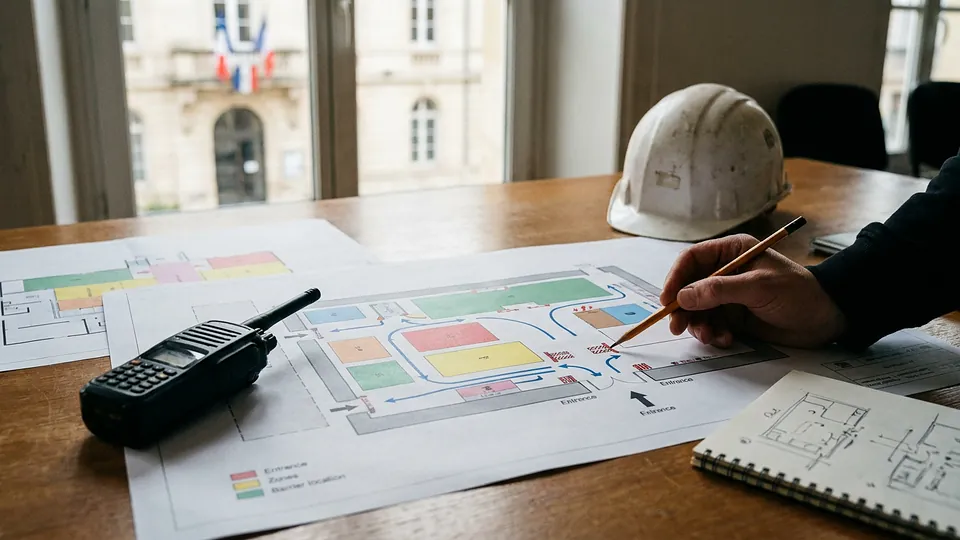
- Site plan with access points, exits, water points, first-aid post and command post, shared between volunteers, guards and first responders;
- Useful numbers circulated: fête organiser, team leader, first-aid post, gendarmerie station;
- Volunteer management: welcome and ticketing roles, no surveillance duties;
- Neighbours notified, car park marked out and lit, end of the evening planned (last departures, site closing).
Sources and reference texts
Private security company in Chalon-sur-Saône, published under the responsibility of Richard Le Goff, president. This guide is for information only and does not replace an assessment of your situation: tell us what you need and we'll reply within 24 working hours.
Who we are